


There are generally 2 types of landlords.
There are the “Me” landlords, and there are the “We” landlords. And in case English is not your first language, let me explain.
“Me” landlords are all about them. They follow a line of thinking that eventually leads straight to them as the final beneficiary. Vacancy, sustained income, profits. As long as they get what they want, and as long as things are working in their favour, they will likely not yield to anything less favourable. They see the mechanical side of things.
“We” landlords work with you. They listen, they understand, and they create an environment where both parties can thrive. Not that they do not want profits themselves, but they are kind enough to know that these profits should not come at the cost of hardship. They see the human side of things.
Now, some of you must be wondering if I am writing this post out of frustration.
Yes. Yes I am.
Because in the 2 locations that I have operated in for my first business, I had a lot of frustration, irritation, and “what are they thinking?” moments directed at them.
I have concluded, albeit a little too late now, that the landlord plays a very important part of your business. Even though they are not necessarily part of your business, they nevertheless are still a factor in its success.
Because sometimes, landlords, very much like some parents towards their children, can think of you as either a person who needs to thrive, or an investment to see an ROI.
The “Me” (Bad) Landlords
You know them. They micromanage the common areas, make you pay for extra administrative fees you’re not supposed to, and hike rentals without assessing the current market condition.
If you do a simple “bad landlords” search on Google, you will find many horror stories on platforms such as Reddit and Quora documenting the horrible things tenants had to go through when dealing with landlords.
This applies to both residential and commercial landlords.
I won’t bore you with the details, but it is safe to say that landlords like these care very little about tenant well-being.
In the world of business, we know that if the business is not profitable, then there is no point in running it. However, if taken to the extreme, profits are what drives people towards greed and apathy.
A fellow retailer that I know of had a decent lease for their place of operation. They started out small in an alleyway off of the main road, and over time grew into an extremely profitable business.
Little did they know that nearing the end of their lease, seeing that their business was printing a lot of cash, their landlord actually increased the rental by over 300% of their rate at the time!
Suffice to say, the fellow retailer told the landlord to stuff it, and they parted ways on not so amicable terms..
When I heard this story, with the landlord’s greed driving an honest tenant out, I can’t help but wonder what was going on through the landlord’s head at the time.
I can only come to the conclusion that they were no longer operating as a landlord, but as an investor who thinks that they are entitled to reap the profits of their tenants.
I know that not all landlords are like this, and I do give them the benefit of the doubt that there may be other motivations for them to do what they did.
Regardless, the actions of one landlord may be enough to tarnish our image of them, and the rampant occurrence of this across nations is enough to paint a certain picture of their intentions.
The “We” (Good) Landlords
On the flip side, the landlords that work with their tenants (instead of against) are the ones to stay.
These are the landlords who listen and assess, focusing on tenant stability which will in turn guarantee their own income stability.
They are not driven by profits, but instead driven by the human desire to connect with others and build healthy relationships.
Though not reported as much as the bad landlords (due to sensationalism), good landlords do exist, and the stories that you hear about them may give you some hope that the industry may not be as bad as it seems.
I know of a friend who used to work in a small cafe. The owner of the cafe was a prominent chef across the nation, and they decided to set up shop outside the suburbs of the city.
Initially, business was great despite the population around the area. Nearby residents and workers would often visit the cafe for a meal, and cars that drove by had easy accessibility to park and dine.
However, one day the government decided that they want to build a highway that runs through the town, and if you have ever watched the Pixar movie “Cars”, you would know that it takes traffic away from the town.
Sales diminished for the small cafe, and the owner had to dig into savings to keep the shop afloat.
It is here that the landlord made the decision to keep the rental rate the same to prevent the cafe owner from bleeding out cash. The landlord understood the owner’s plea, and even though part of the reason for not increasing rent is to retain a tenant for income, the rent has stayed the same for years.
Such a landlord is a blessing to have, because they become one less problem on your mind while you are busy with 99 other problems in your business.
The Landlords I Encountered
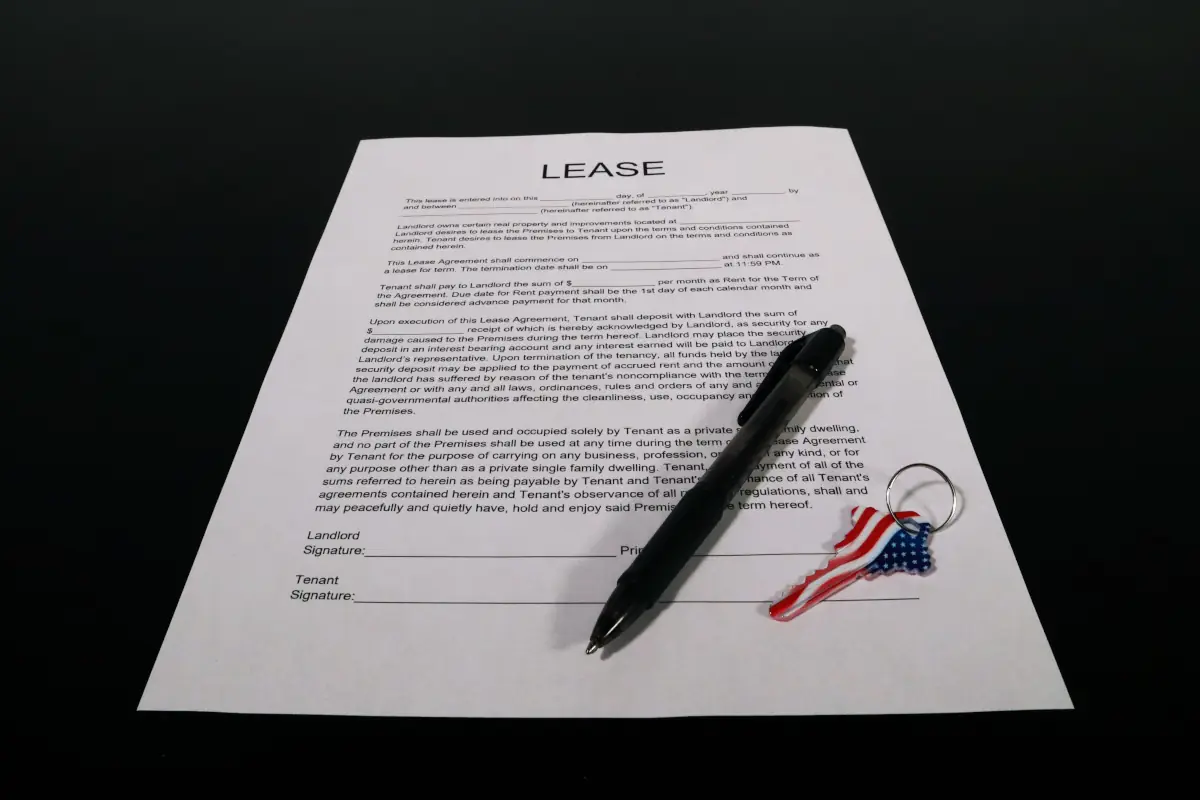
During the course of my business, I operated in 2 different locations under 2 different landlords. Each landlord that I worked with had their shortcomings which were dealbreakers for me, driving me to move out of the location and eventually shut down the business.
Location #1
Before I took over the assets of my first location, I was invited into a WhatsApp group with the previous tenant and the landlord. Things were civil as how they always start out.
There were some red flags that were showing during this emerging period. I was a new business owner then, and the one mistake I made there was getting into restrictive arrangements.
I found out during our discussions that the unit was actually very restrictive, and the landlord was actually not supposed to sub-lease the unit to another tenant under them.
This meant that I could not open a utilities account under my name, and had to be extra careful when declaring who is the rightful tenant of the location when dealing with authorities.
Being naive and optimistic at the time, this information didn’t stick with me for too long and it blew over my head quickly. I continued to agree to the arrangements.
Strike 1.
Once everything was settled, we rolled. I had about 6 months left of the lease and wanted to make good use of it.
During this period, the landlord arranged a new WhatsApp group with just me and them, without the previous tenant in the picture. I could tell that the landlord was actually more of a family running their business, with multiple people in the group chat.
I was communicating mainly with one person in the group, and even though replies were slow, I was at least able to slowly move things forward.
I cleaned up what the previous tenant left for me, save for a few items that were supposedly the landlord’s responsibility.
These items included the awnings and floor being subjected to fair wear and tear. However, when I brought these issues up to the landlord, they didn’t take accountability for it and refused to budge.
Thus, in order for those parts of the shop to be properly functioning, I had to spend upfront capital repairing these items. I didn’t want to waste too much time arguing about whose responsibility certain things were.
Strike 2.
Afterwards, things were fine and dandy for a while. I built up a small customer base and was able to slow work on the business. Margins were tight at first, but slowly came around as months went on.
It was about 2 months before the end of my lease that the main person communicating with me stopped replying, and in place was a different member. Let’s just say that communication degraded horribly from this point forward.
Remember how I was not able to open a utilities account under my company from the start? Well, they opened it for the unit, and it came with a $600 monthly waste removal fee (mind you, the previous tenant’s fees were only at most $40 monthly).
Naturally, I was shocked when the first bill came in. The other family member did not think this was a big deal, and instead of bringing it up to the relevant utilities company, they expected me to pay for it instead, to which I firmly declined.
After a lot of back and forth, I decided that they weren’t going to lift a finger to help me, so I went to the company myself and managed to acquire a fair fee. Despite this, they said that the fees will remain the same for subsequent months until they have properly processed this change.
So now, I am stuck with the consequences of my landlord’s actions, but without their obligation to resolve this issue.
Strike 3.
It was then I decided that I could not continue this any longer. I dropped them a text declaring that I will be moving out of the unit once the lease ends.
As you might expect, all hell broke loose.
The main contact came back to the group and tried to put out fires, offering a lowered rental rate on my next renewal and to pay the majority of the fees, stating that it was a big amount and hoped that I could chip in (what a cheapskate).
Anything they offered was met with a hard “no” from me, because I was exhausted and figured that they only started resolving these issues once they are threatened with a loss in income.
Needless to say, when the last day of the contract was up, I packed up my stuff and moved out.
Landlord #2
Prior to moving, I was in communication with the tenant of the 2nd location. During discussions, I received revenue figures and the current rental rate of the unit.
Due to a lack of experience and knowledge, I did not realise that that tenant was already not doing well, having a rent-to-revenue ratio of 23% (achieved after 3 years of operations) instead of the industry standard of 15%.
They were also relying on underpaid staff to keep the business running, which was a major red flag that I did not notice.
Nevertheless, I pushed forward with hope. After settling on the takeover amount and administrative tasks, I began to work.
In hindsight, rushing into things was not the right call, because the new location had a lot of things that were not going for it.
Firstly, compared to other shops in the area that have decent visibility, mine was tucked away behind an overhead pedestrian bridge and vending machines. The only way that anyone could see my shop was if they were walking directly in front of it or through a small gap under the structure of the pedestrian bridge.
Secondly, because this new location was set in a night-life district, high foot traffic only occurs at night for only about 2 to 3 hours. The streets are more similar to a post-apocalyptic wasteland for most of the day.
Additionally, the demographics of the area did not fit the product that we were trying to sell, which was bubble tea and snacks (low-ticket low-margin) which required a good capture rate and high volume, 2 things that were not in our favour. This was a misfire on our part.
Thus, margins were infinitesimally small, making it so that I was basically working to pay the landlord, instead of building the business.
You may think that my business was not good enough to sustain a steady revenue, and believe me that was my thought process for months while operating here.
I was working 7 days a week, 11 hours a day, building a decent repeating customer base and handling rushes by myself (yes, there were times when demand was good). Yet, I was earning just enough to scrape by month after month.
Business was alright at first, but over time, market forces brought less customers to the area, and consequently less foot traffic to the store. Consumer buying habits changed, and conflicts across the world led to an unstable economy.
Looking at this, I was hoping that my landlord would be willing to offer a lower rental rate, especially because the lease that I took over was renewed for the previous tenant, and therefore I may get a reset.
Unfortunately, they stated that they will be maintaining the rate at the same level, giving little consideration to what is happening on the ground and citing that other units they own are given the same rental rate if not more.
Of course, I may not have the full picture, and the landlord may have a good reason in holding on to the rental rate. In fact, I know that landlords are less likely to lower rental rates because it denotes a decrease in the property’s value, which gives them less leverage to borrow money against their property.
It is the lack of consideration that gets us questioning.
In the end, I had to announce my departure again, and once again, the landlord started to put out fires, trying to reduce vacancy in their unit by asking if I know anyone willing to take over the unit, or offering a month-by-month rental at half the rate until they find someone to fill in the void.
From my perspective, all of this is at the cost of the tenant, to source for someone, or to stay in a not-so-profitable environment.
I do find the lack of consideration fascinating.
There is a part of me deep down that doesn’t want the landlord to win, to sustain a vacant unit for a long time and not have anyone occupy the rent, but that is just my ego speaking.
The only thing I can tell myself is that it is better to let go than to stay in an environment not fit for me.
The Road Ahead

Plenty of hard lessons were learnt – there is always a silver lining in any experience. For me, this was a world-class lecture about navigating relationships with close affiliates of my business, especially stakeholders with great power.
It is important to recognize who we are dealing with, and this comes from speaking to the landlords themselves. Otherwise, how else can we see their mannerisms and hear their thought process first-hand?
Talk to them in person before agreeing to anything. Understand the way they do business and think about working relationships. There is more gold in face-to-face communication than text messages.
For me, when I do meet with more landlords in the future, I will hopefully have a better game plan on handling these types of relationships, and a better perspective of who I can and cannot work with.
To the landlords out there, we are not saying that you cannot do the things you do; do them with consideration.
Have you encountered hard-to-work-with landlords before? Drop them below!